Football
Football is a globally recognized team sport characterized by two opposing sides competing to advance a ball into the opponent’s goal or end zone, depending on regional rules. While terminology varies—“football” commonly refers to soccer in most countries and American football in the United States—the core concept centers on coordinated movement, strategy, physical execution, and shared objectives. Its widespread appeal stems from accessibility, cultural resonance, and adaptability across age groups, skill levels, and formats—from informal street play to elite professional leagues.
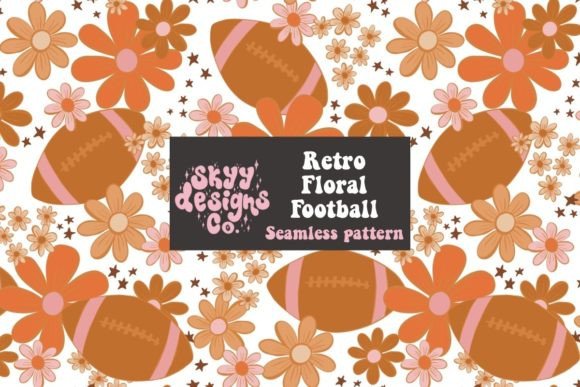
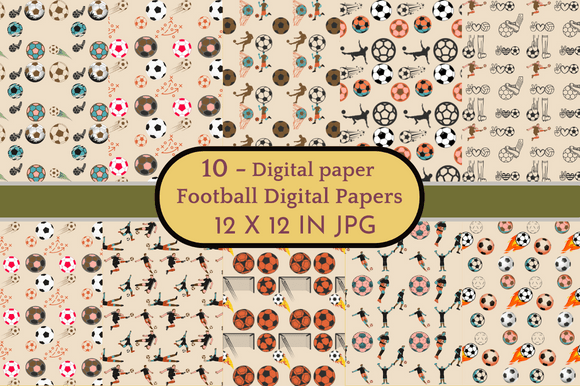
People explore Football for diverse reasons: as participants seeking physical activity and teamwork; as spectators drawn to narrative, rivalry, and community; or as educators and creators using its visual language and symbolism in design projects. In creative contexts—such as digital paper design—Football often appears through stylized motifs: stitched balls, geometric field lines, jersey textures, or bold typography evoking energy and motion. These elements translate effectively into repeatable patterns suitable for print and digital applications.
Why Football-Inspired Digital Papers Matter for Creative Work
Digital paper backgrounds serve functional and aesthetic roles in crafting, publishing, and event planning. When themed around Football, they offer visual cohesion for projects tied to sports events, youth leagues, school activities, or fan-driven celebrations. Unlike generic patterns, Football-themed designs carry immediate contextual meaning—helping users communicate purpose at a glance.
The inclusion of Football motifs in a digital paper pack—like the set described—adds thematic relevance without compromising versatility. For example, a seamless pattern featuring subtle hexagonal ball textures can support invitation designs for a youth soccer tournament while remaining appropriate for a scrapbook page documenting a season’s highlights. The effectiveness lies not in literal representation alone, but in how abstraction and repetition support usability across scales and media.
Practical Considerations for Using Football Digital Papers
High-resolution digital papers—such as those provided at 3600×3600 pixels, 300 DPI, and 12×12 inches—meet industry standards for print production. This resolution ensures clarity when scaled for physical outputs like invitations, banners, or printed cards. Users working primarily in digital formats (e.g., social media graphics or PDF presentations) may find the same files unnecessarily large unless resizing is part of their workflow. In such cases, downsampling preserves quality while reducing file size and improving software responsiveness.
Seamless tiling is essential for consistent coverage across large surfaces or repeated elements. A well-constructed Football pattern avoids visible joins or alignment artifacts when repeated horizontally or vertically—critical for background fills in layout software or craft templates. Reviewing sample tiles before full integration helps confirm visual continuity, especially with complex motifs like interlocking laces or gradient field textures.
When Football-Themed Patterns Are a Strong Fit
This type of digital paper excels in scenarios where thematic consistency supports communication goals. Examples include:
- Designing printable party supplies for Football-themed birthdays—invitations, cupcake toppers, or photo booth props;
- Creating educational materials for physical education units or after-school programs focused on teamwork and sport history;
- Building custom stationery for amateur league administrators needing branded letterheads or schedule sheets;
- Supporting scrapbooking projects that document personal or family involvement in Football—whether as players, coaches, or supporters.
In each case, the pattern functions as a quiet reinforcement—not dominating the composition, but anchoring it in shared understanding. Its value increases when paired with complementary fonts, color palettes, and imagery that reflect authentic Football culture rather than stereotyped visuals.
When Alternatives May Be More Appropriate
Football-themed papers are less suitable when neutrality, inclusivity, or broader appeal is required. For instance, school-wide event materials may benefit from abstract geometric patterns rather than sport-specific iconography to avoid unintentionally excluding non-participants. Similarly, professional branding projects—such as corporate wellness initiatives—often prioritize clean, minimalist design over thematic decoration.
Users with limited design experience may also find highly detailed Football patterns challenging to balance alongside text or photographs. Busy motifs can compete for attention, reducing readability or visual hierarchy. In those situations, simpler textures—like subtle linen or matte gradients—offer flexibility without demanding advanced layout skills.
Evaluating Alignment With Your Needs
To determine whether Football digital papers match your goals, consider three practical questions:
- What is the primary function of the project? If it serves an informational or administrative role (e.g., a league registration form), visual theme should enhance—not obscure—clarity. If it supports celebration or identity (e.g., a championship banner), thematic resonance becomes more valuable.
- Who is the intended audience? Youth participants may respond positively to bold, colorful Football patterns. Adult audiences—especially in formal or mixed-interest settings—may prefer restrained interpretations or neutral alternatives.
- What tools and output methods will you use? Confirm compatibility with your design software and final medium. Some platforms handle high-resolution JPGs efficiently; others perform better with vector-based or SVG-compatible assets. Also verify color profiles if printing professionally—RGB files may require conversion to CMYK for accurate reproduction.
It’s also worth noting that Football itself evolves—both as a sport and as a visual reference. Contemporary design trends favor authenticity over cliché: think muted tones inspired by vintage kits, minimalist line art of silhouetted players, or typographic treatments rooted in official league fonts. Selecting patterns aligned with current conventions helps maintain relevance beyond seasonal use.
Final Insight for Decision-Making
Football digital papers are neither universally essential nor inherently limiting—they are tools whose usefulness depends on context, intent, and execution. Their strength lies in specificity: they solve particular problems related to thematic coherence and visual shorthand. However, their utility diminishes when applied without attention to scale, contrast, audience expectations, or technical constraints.
Before committing to any themed asset pack, review samples at actual size, test them in your intended layout environment, and assess whether they simplify or complicate your workflow. If the patterns support your message without requiring excessive editing or compromise, they’re likely a sound choice. If they demand significant adaptation—or distract from core content—they may signal a need to explore broader or more neutral options.
Ultimately, the decision hinges less on Football as a subject and more on how thoughtfully its visual language integrates into your specific creative process.