Stand Collar Shirt Patterns: A Strategic Design Choice for Modern Fashion Entrepreneurs
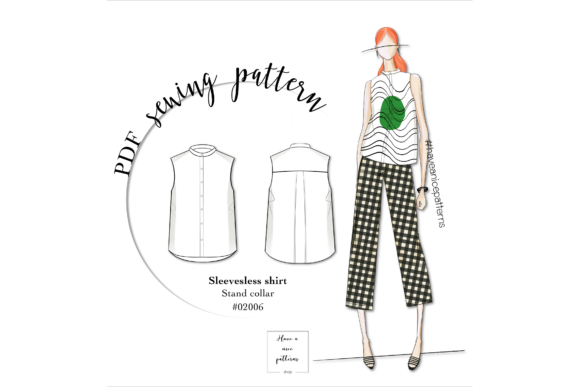
The Stand Collar Shirt is more than a silhouette—it’s a convergence of precision tailoring, minimalist aesthetics, and adaptable functionality. Unlike traditional collared shirts that rely on fold-over or button-down styles, the stand collar sits upright, framing the neckline with clean architectural lines. When reimagined as a sleeveless ruffled stand collar shirt, it gains expressive dimension—softening structure with delicate ruffles while retaining sharpness in proportion and construction. This duality makes it especially compelling for today’s fashion professionals: designers launching capsule collections, small-batch makers scaling sustainable production, and digital pattern entrepreneurs building scalable, print-at-home offerings.
Why the Stand Collar Shirt Is Resonating Now
Consumer preferences have shifted decisively toward intentional versatility. Shoppers no longer seek garments defined solely by occasion—but by adaptability across contexts: work-to-weekend transitions, layered under blazers or worn solo in transitional weather, styled with tailored trousers or fluid skirts. The sleeveless ruffled stand collar shirt meets this demand without compromise. Its lack of sleeves expands seasonal wearability (ideal for spring layering or summer breathability), while the stand collar delivers polish without formality—bridging smart-casual and elevated leisure.
Simultaneously, the broader fashion industry is accelerating its adoption of digital-first pattern ecosystems. Physical pattern distribution involves inventory, shipping, storage, and waste—costs that disproportionately impact independent creators. In contrast, a Digital Pattern PDF Sewing Pattern like this one—offering UK sizes 4 through 14 in both A4 and A0 formats—enables instant, global access with zero physical footprint. For entrepreneurs, this isn’t just convenience; it’s infrastructure optimisation. It allows rapid iteration, A/B testing of design variations, and integration with automated print-on-demand services or custom-fit platforms.
Design Intelligence Embedded in the Pattern
This particular Stand Collar Shirt pattern reflects thoughtful technical strategy. Its inclusion of a back yoke isn’t merely stylistic—it’s ergonomic. The yoke provides stability across the shoulder blades, improving fit retention over time and accommodating varied back widths without distorting the collar’s upright posture. Paired with seven functional buttons, the front placket offers adjustable ventilation and visual rhythm—critical for perceived quality in close-up styling and photography.
The ruffle detail is equally deliberate. Rather than being applied as an afterthought, it’s engineered into the collar’s base seam allowance—ensuring consistent volume and drape across all sizes. This level of integrated detail signals professional-grade pattern drafting, distinguishing it from amateur adaptations where embellishments often undermine structural integrity.
Fabric Flexibility as a Business Advantage
One of the most operationally valuable traits of this design is its cross-fabric resilience. The pattern works equally well in crisp cotton poplin for structured office wear, fluid rayon challis for editorial softness, or even medium-weight linen blends for artisanal summer collections. This versatility directly supports business models rooted in lean inventory and responsive production. A maker can stock one pattern file and produce dozens of SKU variations—not by altering the core design, but by varying fabric, trim, and finishing techniques.
For example, a UK-based sustainable brand might use organic Tencel™ for their core line, then license the same pattern to regional collaborators who interpret it in locally sourced hemp or deadstock voile—maintaining brand coherence while decentralising material sourcing. That kind of scalability is only possible when the underlying pattern architecture is robust, size-inclusive, and technically transparent.
Size Inclusivity as Operational Discipline
The provision of UK sizes 4–14—not as scaled increments but as individually drafted blocks—is a marker of serious pattern development. Each size set (A4 UK 4–8: 50 pages; UK 10–14: 51 pages; A0: 7 pages) includes full grading validation, ensuring proportional accuracy in the collar height, yoke width, and button spacing. This eliminates guesswork during sample development and reduces costly fit revisions down the line.
From a workflow perspective, the A0 format serves professional ateliers and small manufacturers who use wide-format printers—cutting layout time by over 60% compared to tiling 50+ A4 sheets. Meanwhile, the A4 versions remain accessible to home sewists and micro-entrepreneurs without specialised equipment. This dual-format approach reflects an understanding that the modern creator ecosystem spans multiple tiers of capability—and successful digital patterns must serve them all without dilution.
Printing Precision: Where Technical Rigour Meets User Experience
The instructions—print at 100% scale, borderless, verify centimetre scale markers—are not arbitrary. They’re safeguards against one of the most common failure points in digital pattern adoption: misprinted scale. A 2% error compounds across seams, resulting in misaligned collars or skewed yokes. By requiring verification at the page level, the pattern embeds quality control directly into the user’s first interaction.
Further, the note—“This new layout doesn’t require trimming”—signals evolution in digital pattern UX. Older tiled patterns demanded meticulous cutting and alignment, creating friction for beginners and inefficiency for pros. Eliminating trimming saves time, reduces paper waste, and improves repeatability—especially important when printing multiples for team use or teaching workshops.
Strategic Implications for Creators and Marketers
For marketers, this Stand Collar Shirt pattern represents a high-conversion product archetype: it solves multiple latent needs at once—time efficiency (no trimming), technical confidence (verified scale, graded sizes), aesthetic distinctiveness (ruffled stand collar), and commercial flexibility (fabric-agnostic, size-inclusive). Content strategies that highlight these intersections—e.g., “How One Pattern File Powers Three Seasonal Collections”—resonate more deeply than generic feature lists.
For freelancers and educators, the pattern serves as a pedagogical anchor. Teaching collar construction, yoke integration, or ruffle attachment becomes demonstrable through a real-world, market-ready garment—not an abstract exercise. Its clean lines and logical seam progression make it ideal for intermediate skill-building, while its nuanced details invite advanced exploration.
Looking Ahead: Patterns as Platforms
The future of sewing patterns isn’t just digital—it’s modular, interoperable, and data-aware. This Stand Collar Shirt pattern already exhibits early platform qualities: its clean geometry lends itself to parametric adjustments (e.g., collar height sliders in future web-based editors); its documented measurements support integration with body-scanning apps; and its multi-format delivery anticipates hybrid workflows where A0 files go to production and A4 files support client collaboration.
As AI-assisted pattern grading, generative fabric simulation, and AR fitting previews mature, foundational assets like this will become even more valuable—not as static downloads, but as interoperable components in larger creative systems. The choice to invest in rigorously developed, contextually intelligent patterns today is, fundamentally, a strategic investment in future adaptability.
Ultimately, the Stand Collar Shirt—in its sleeveless, ruffled, digitally delivered form—is emblematic of a broader shift: from viewing garments as end products to recognising them as dynamic nodes in a responsive, human-centred design network. For professionals navigating complexity with clarity, that’s not just relevance. It’s readiness.